What “checked” means: Bibliographic identity and linked records checked. Publisher descriptions or selected institutional pages reviewed where stated. Full books have not been exhaustively fact-checked. A verified record does not validate every claim in a work.
Reviewed 2026-10-08. Primary-source records may preserve translation and colonial mediation. Reading notes are editorial guidance, not extracts from entire books. Alternative theories and fiction remain part of the collection with explicit labels.
77 of 77 records
Primary sourcePathway 1
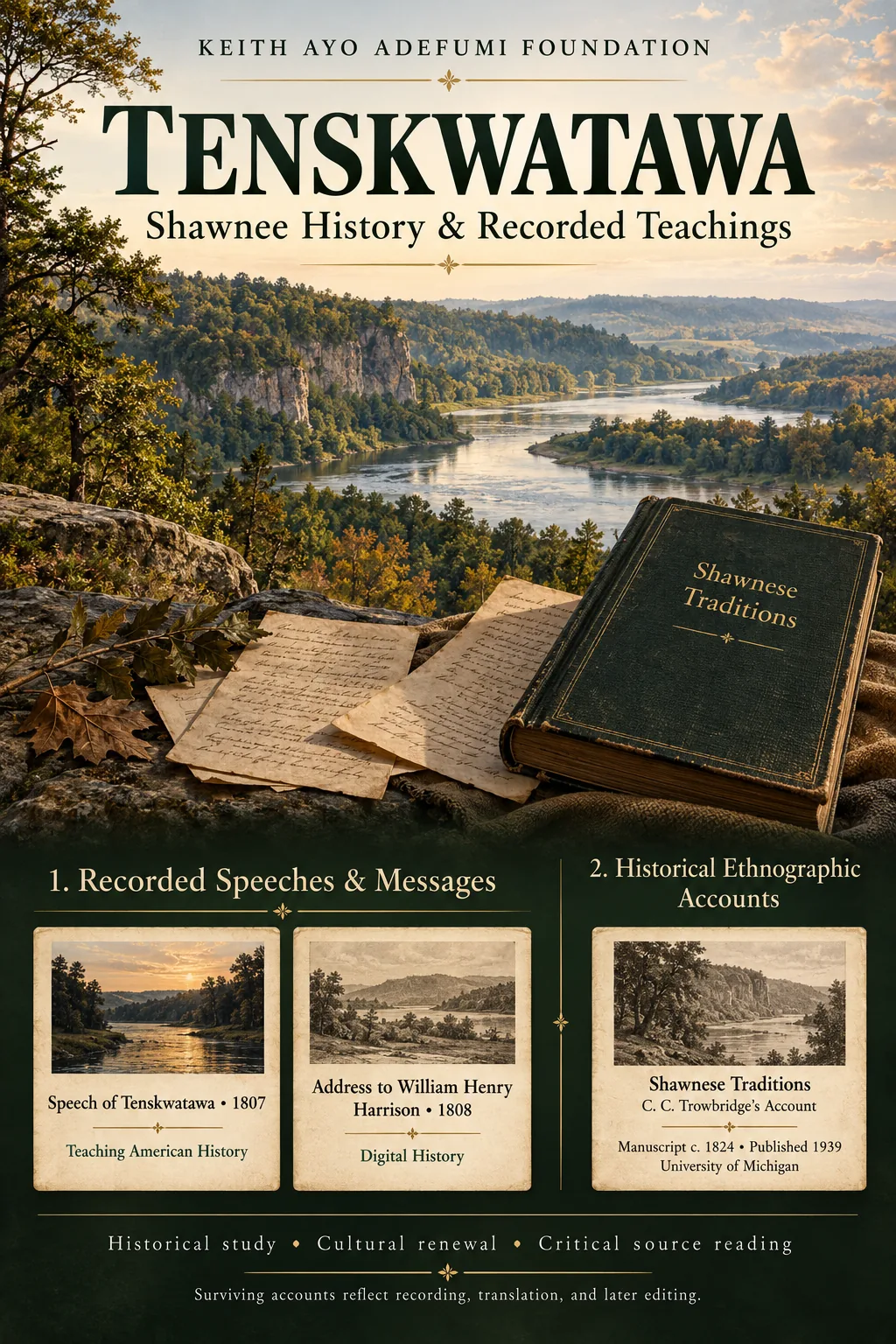
Speech of Tenskwatawa
Tenskwatawa; recorded in John Lambert’s Travels · 1807
Compare spiritual renewal with the recorder’s framing. This is a mediated historical transcription, not an audio record.
C. C. Trowbridge; edited by Vernon Kinietz and Erminie W. Voegelin · 1939; manuscript c. 1824
Interviews and interpretations recorded by a government agent. Read with attention to translation, colonial context, and the agency of Shawnee speakers.
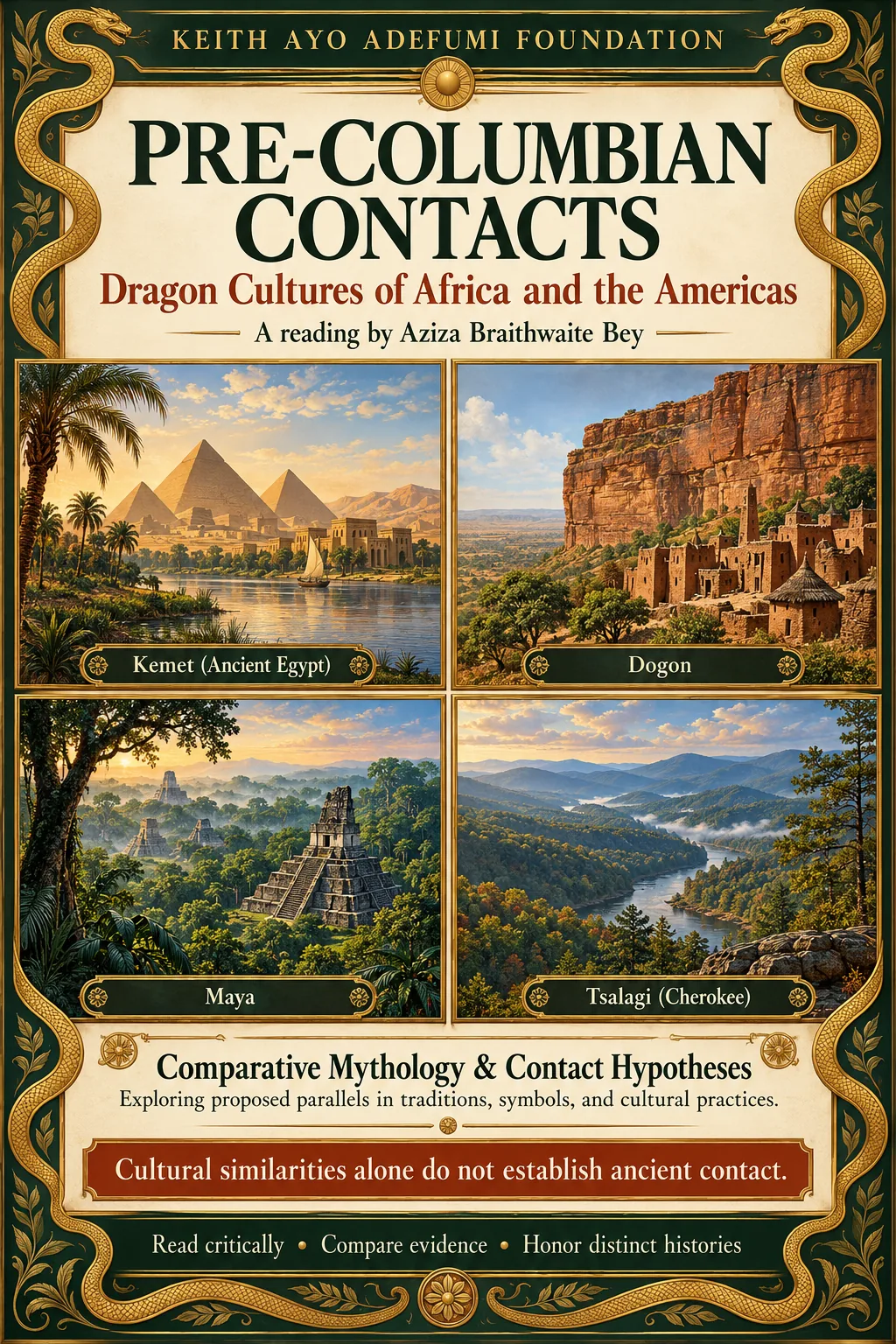
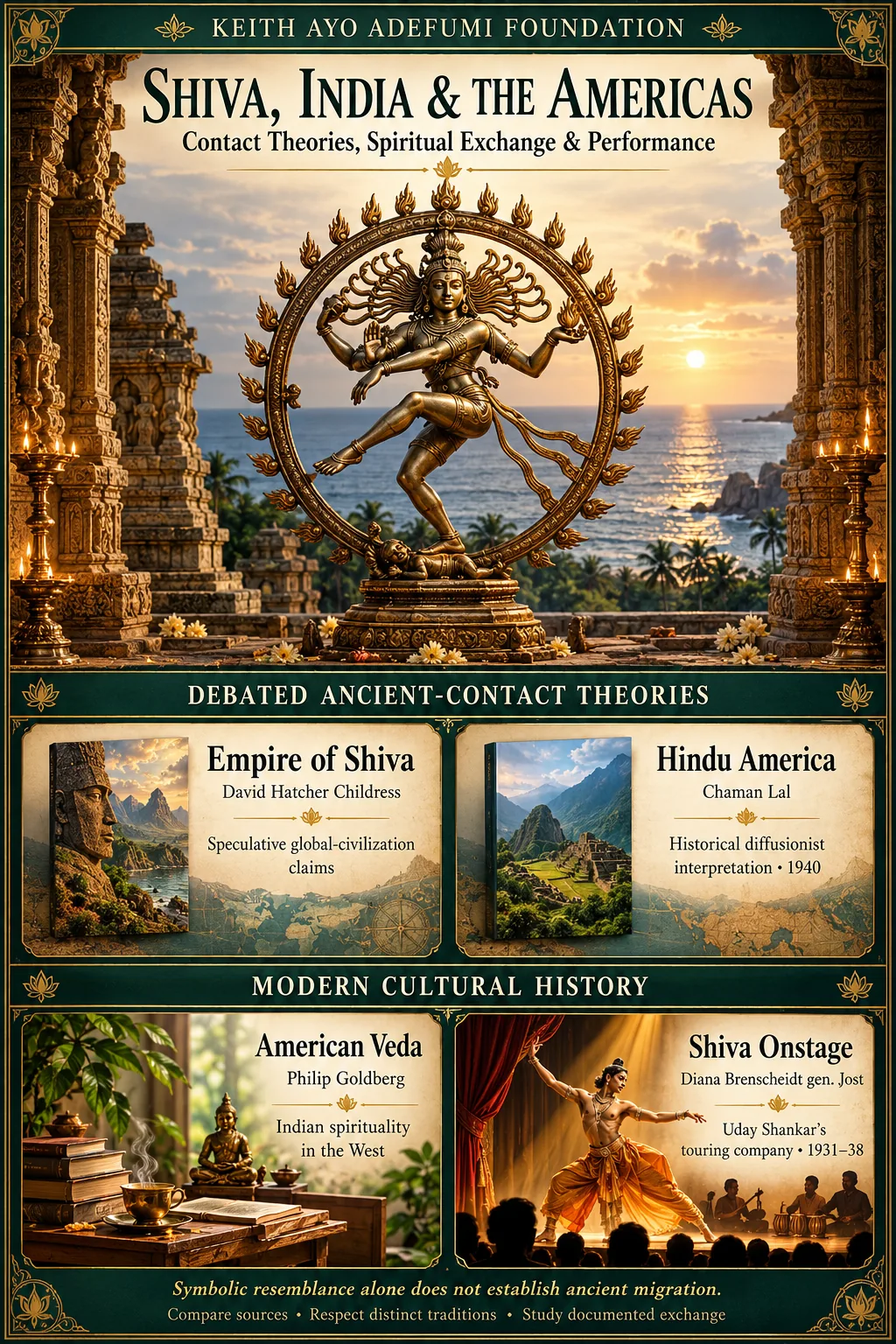
The author proposes prehistoric global Shaivite voyaging. Treat the proposal as a claim to investigate, distinct from documented modern religious history.
Liminal Spaces: Migration and Women of the Guyanese Diaspora
Grace Aneiza Ali, editor · 2020
Fifteen women’s narratives and artworks offer intergenerational perspectives on migration. Do not assume the volume establishes Chicago neighborhood settlement patterns.
Record and description reviewed · Open Book Publishers
Cheddi Jagan International Airport Corporation: agency profile
Government of Guyana · Institutional web resource
An official chronology links Atkinson Field (1941), Timehri (1969), and the Cheddi Jagan naming (1997). It does not document routes from particular Midwest factories.
Record and description reviewed · Government of Guyana GovPortal
University of Guyana Library · Institutional history
Records the university’s opening in 1963. Replace blanket claims that post-independence Guyana had no local university with specific evidence about educational access.
Record and description reviewed · University of Guyana Library
History of the Board of Trade of the City of Chicago
Charles Henry Taylor, editor · 1917; three volumes
An institutional history with historical and biographical volumes. Read its celebratory and colonial framing critically. The record does not itself prove direct transmission of VOC trading rules to Chicago.
Bibliographic record and description checked · University of Illinois digitized collection
Lodewijk Petram; translated by Lynne Richards · 2014 English edition
Explores the Amsterdam market for VOC shares and complex trading practices. Compare securities trading with later standardized commodity futures without assuming identical institutions.
Bibliographic record and description checked · Columbia University Press
A History of the Chicago Portage: The Crossroads That Made Chicago and Helped Make America
Benjamin Sells · 2021
The verified title and publisher replace the supplied Southern Illinois attribution. Study the Indigenous trade corridor and later contests over waterways; specific WIC links require further evidence.
Bibliographic record and description checked · Northwestern University Press
Helen Hornbeck Tanner, editor; cartography by Miklos Pinther · 1987
Maps community locations and movements from 1640 to about 1871. Consider warfare, displacement, epidemics, treaties, and resistance together rather than reducing all change to one company.
Bibliographic record and description checked · University of Oklahoma Press / Newberry Library
An exchange account distinguishing the CBOT’s early forward trading and standardized futures in 1865. Use as institutional testimony and compare with independent histories.
Bibliographic record and description checked · CME Group
Colonial and Intertribal Wars: Beaver Wars (1628–1701)
Citizen Potawatomi Nation · 2023
A Native nation’s account of trade, warfare, alliances, displacement, and the Great Peace of Montreal. Dates and interpretations should be attributed to the source.
Bibliographic record and description checked · Citizen Potawatomi Nation
Comparative context for Dutch expansion in Asia and the Atlantic. Examine local societies, colonial coercion, and differences between VOC and WIC operations.
Bibliographic record and description checked · Cambridge University Press
The Dutch and English East India Companies: Diplomacy, Trade and Violence in Early Modern Asia
Adam Clulow and Tristan Mostert, editors · 2018
A collection on commercial, diplomatic, and military interactions. Distinguish chartered authority, state connections, and negotiation with Asian powers from claims of unlimited corporate sovereignty.
Bibliographic record and description checked · Amsterdam University Press
Merchant Kings: When Companies Ruled the World, 1600 to 1900
Stephen R. Bown · Thomas Dunne Books edition; see publisher record
Biographical accounts of chartered-company leaders across several empires, including VOC and WIC figures. Identify whose perspectives the leadership lens foregrounds or leaves out.
Bibliographic record and description checked · Macmillan / Thomas Dunne Books
Merchant in Asia: The Trade of the Dutch East India Company During the Eighteenth Century
Els M. Jacobs · 2006
An archival study of VOC commerce. Verify quantities, commodity shares, units, period, and page references before repeating a precise percentage of turnover.
Bibliographic record and description checked · Amsterdam University Press / Google Books record
Heaven’s Wrath: The Protestant Reformation and the Dutch West India Company in the Atlantic World
D. L. Noorlander · 2019
Investigates religion and the Dutch Atlantic enterprise. Evaluate the author’s argument alongside evidence rather than treating religion as a single explanation for every corporate decision.
Bibliographic record and description checked · Cornell University Press
A historical study of WIC operations in the Hudson region. Assess its period-specific assumptions and compare its account with newer scholarship and Native perspectives.
Bibliographic record and description checked · University of Pennsylvania Online Books
Tom Lewis · Yale University Press edition; see publisher record
An environmental and cultural history of the river corridor. Read the Dutch colonial period within the river’s broader history rather than as a WIC-only commercial story.
Bibliographic record and description checked · Yale University Press
An institutional web article presenting maps from McGill’s collection. It identifies Chilaga as a legendary place on the western frontier of Nova Francia in Wytfliet’s 1597 map. It does not establish identification with modern Chicago or a VOC/WIC investment strategy.
Article identity and relevant map commentary checked; not a book · McGill University Library / Library Matters
Chief George H.M. Johnson, Onwanonsyshon: His Life and Work Among the Six Nations
Horatio Hale · 1885 magazine article; digitized reprint cataloged [1895?]
A contemporary biographical account useful for studying Johnson’s interpretation and cultural knowledge. Read its nineteenth-century framing critically. No verified passage linking his work to Chilaga has been established.
Bibliographic record checked; relevant book passages not fully reviewed · Canadiana / Canadian Research Knowledge Network
A historical regional account containing both legends and history. Separate documented events from traditions and period assumptions. Specific claims about systematic place-name mistranslation or Chilaga require page references.
Bibliographic record checked · Library of Congress
The biography reports Catherine Rollston’s capture at thirteen and adoption, describes her Dutch ancestry as alleged, and identifies Helen as the daughter who married John Smoke Johnson. It provides no documented WIC settlement or shipping lineage.
Article record and relevant family-history account checked · Dictionary of Canadian Biography / University of Toronto and Université Laval
A nation-authored account of Clan Mothers’ political, social, ceremonial, and educational responsibilities. It describes selection and removal of chiefs; do not reduce office-holding to automatic biological inheritance. This is an Onondaga account, not a substitute for Mohawk-specific guidance.
Institutional page and relevant governance account checked · Onondaga Nation
Afro Sheen: How I Revolutionized an Industry with the Golden Rule, from Soul Train to Wall Street
George E. Johnson with Hilary Beard · 2025
A first-person business memoir. The publisher describes Johnson Products’ major-exchange listing and Soul Train sponsorship. Read retrospective testimony alongside archives; bibliographic checking is not full verification of the memoir.
Publisher record and description checked · Little, Brown and Company / Hachette
The HistoryMakers · Oral-history collection profile
The collection profile reports Johnson’s Mississippi birth in 1927 and move to Chicago with his mother in 1929. Use it to investigate family migration and business formation without presuming motives not established by the profile.
Indexed institutional biography checked · The HistoryMakers
William Johnson’s Natchez: The Ante-Bellum Diary of a Free Negro
William Johnson; edited by William Ransom Hogan and Edwin Adams Davis; introduction by William L. Andrews · 1951 original edited publication; 1993 paperback edition
An edited diary covering sixteen years of antebellum Natchez life. The historical title retains period terminology. Johnson was formerly enslaved and later enslaved other people; study freedom, racial restrictions, commerce, and slavery together. Distinguish diary testimony from editorial interpretation.
Publisher identity, edition, and description checked · LSU Press
National Park Service, Natchez National Historical Park · Institutional history resource
Interprets William Johnson’s life and 1835–1851 diary. Pair with the edited primary source and examine both his economic achievements and participation in slavery. Avoid an unsupported claim that his diary is uniquely the single most comprehensive source.
Institutional page and relevant historical account checked · U.S. National Park Service
The Warmth of Other Suns: The Epic Story of America’s Great Migration
Isabel Wilkerson · 2010; later paperback edition
A narrative history of the Great Migration through three individual lives, including Ida Mae Gladney’s Mississippi-to-Chicago journey. Examine Southern racial oppression, personal decisions, and barriers encountered after arrival. Use as wider context for George E. Johnson, not proof of a particular family’s motives.
Publisher record and reading-guide scope checked · Penguin Random House
Black Business Enterprise: Historical and Contemporary Perspectives
Ronald W. Bailey, editor · 1971
A collection on Black enterprise and economic conditions. The institutional record confirms title, editor, publisher, and year; the claimed extensive Johnson Products profiles have not been verified. Request chapter and page citations before attributing specific analysis.
Bibliographic identity checked; claimed Johnson Products coverage pending · University of Illinois, Illinois Experts; Basic Books
Mississippi Blues Commission / Mississippi Blues Trail · Undated historical marker resource
Documents the Illinois Central migration corridor and the movement of blues musicians and communities from Mississippi to Chicago. It does not identify George E. Johnson’s own train journey; verify that family-specific route separately.
Institutional marker text checked · Mississippi Blues Trail
Horatio Hale, editor; Indigenous contributors acknowledged in the text · 1883
Chapter III credits J. S. Johnson’s dictation, George H.M. Johnson’s English interpretation, and Isaac Bearfoot’s revision. Chapter I discusses a river tradition linking the Allegheny, Ohio, and Mississippi. Read Hale’s migration arguments as historical interpretations requiring comparison with current scholarship and community perspectives, not proof of a WIC-derived family route.
Bibliographic record and selected Chapters I and III passages checked · Project Gutenberg digitized historical text
Research queue: 92 additional supplied reading leads
These titles are preserved from the supplied collection but are outside this edition’s completed review. Before adding them to the checked catalog, confirm author, edition, exact title, a stable publisher or library record, genre, and the evidence behind any specific claims. Similar or shortened titles may need disambiguation.
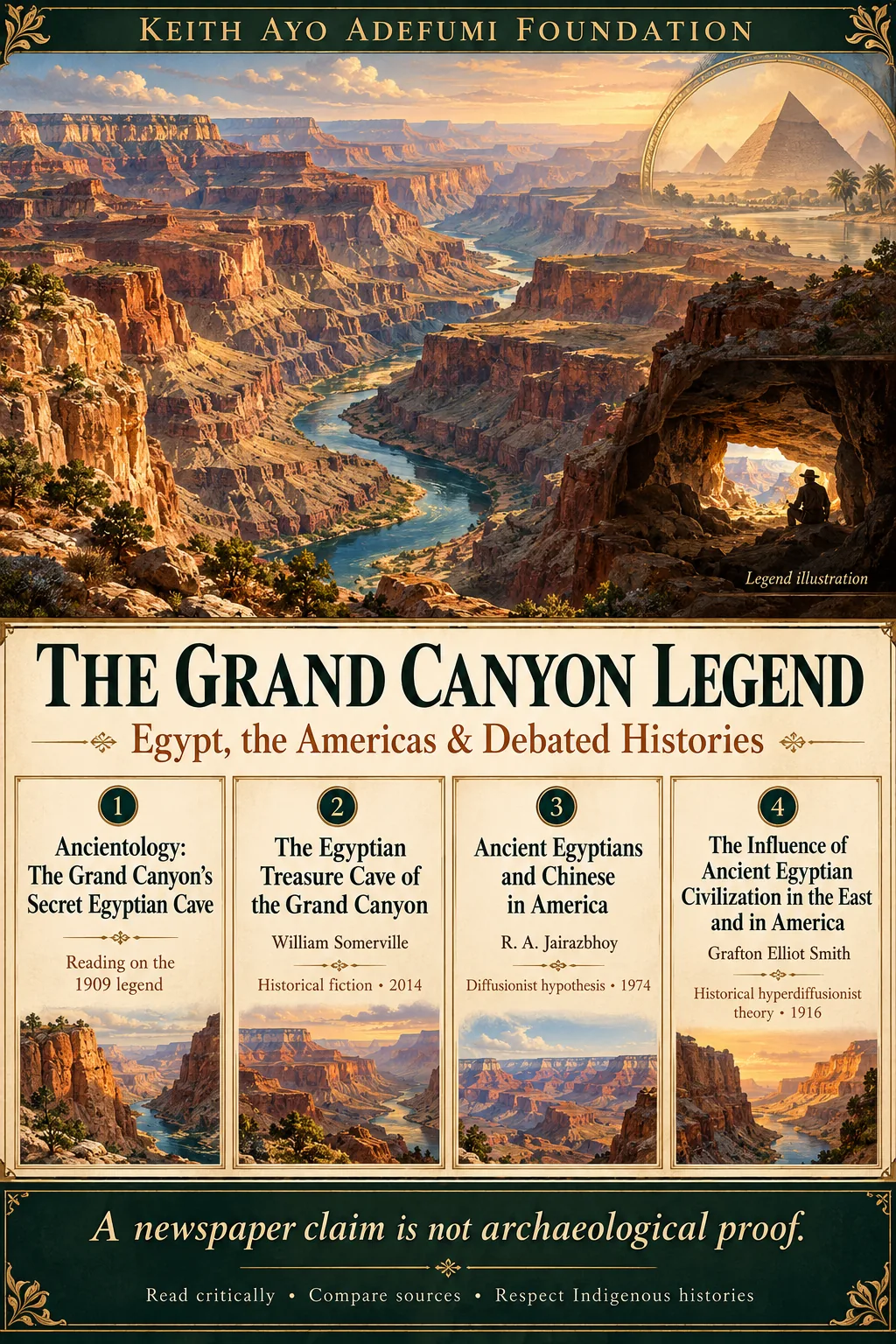
Ancientology: The Grand Canyon’s Secret Egyptian Cave
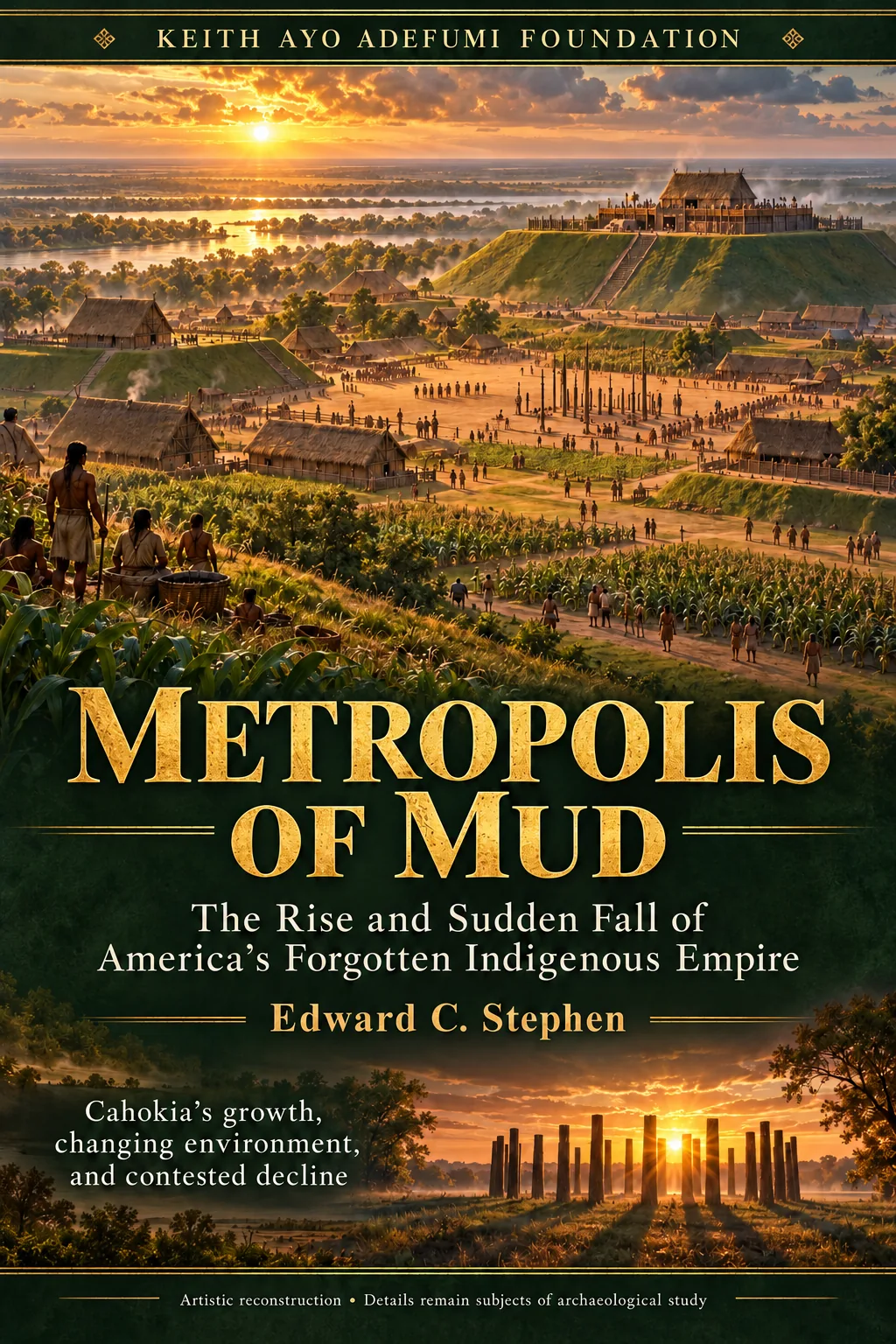
Metropolis of Mud
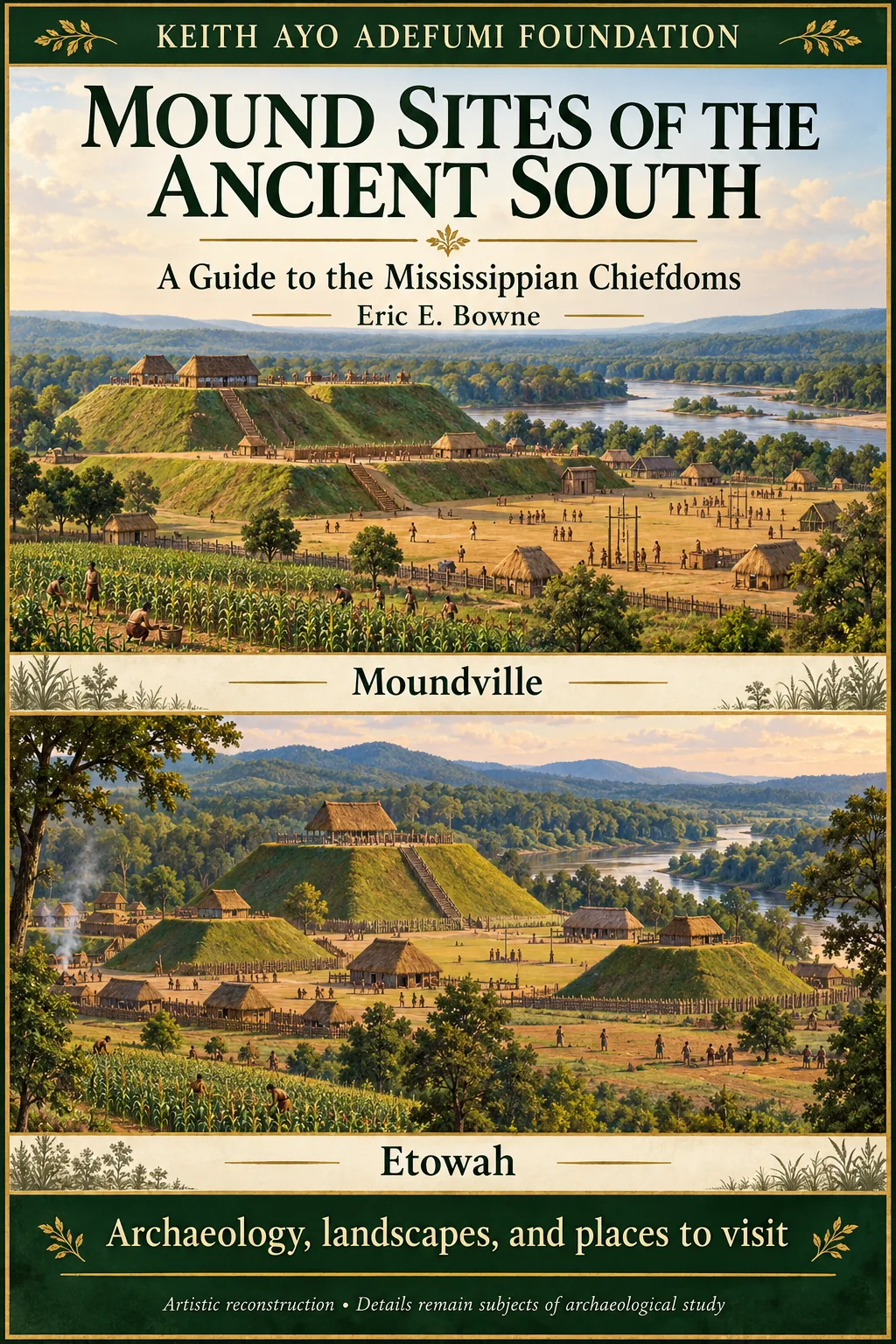
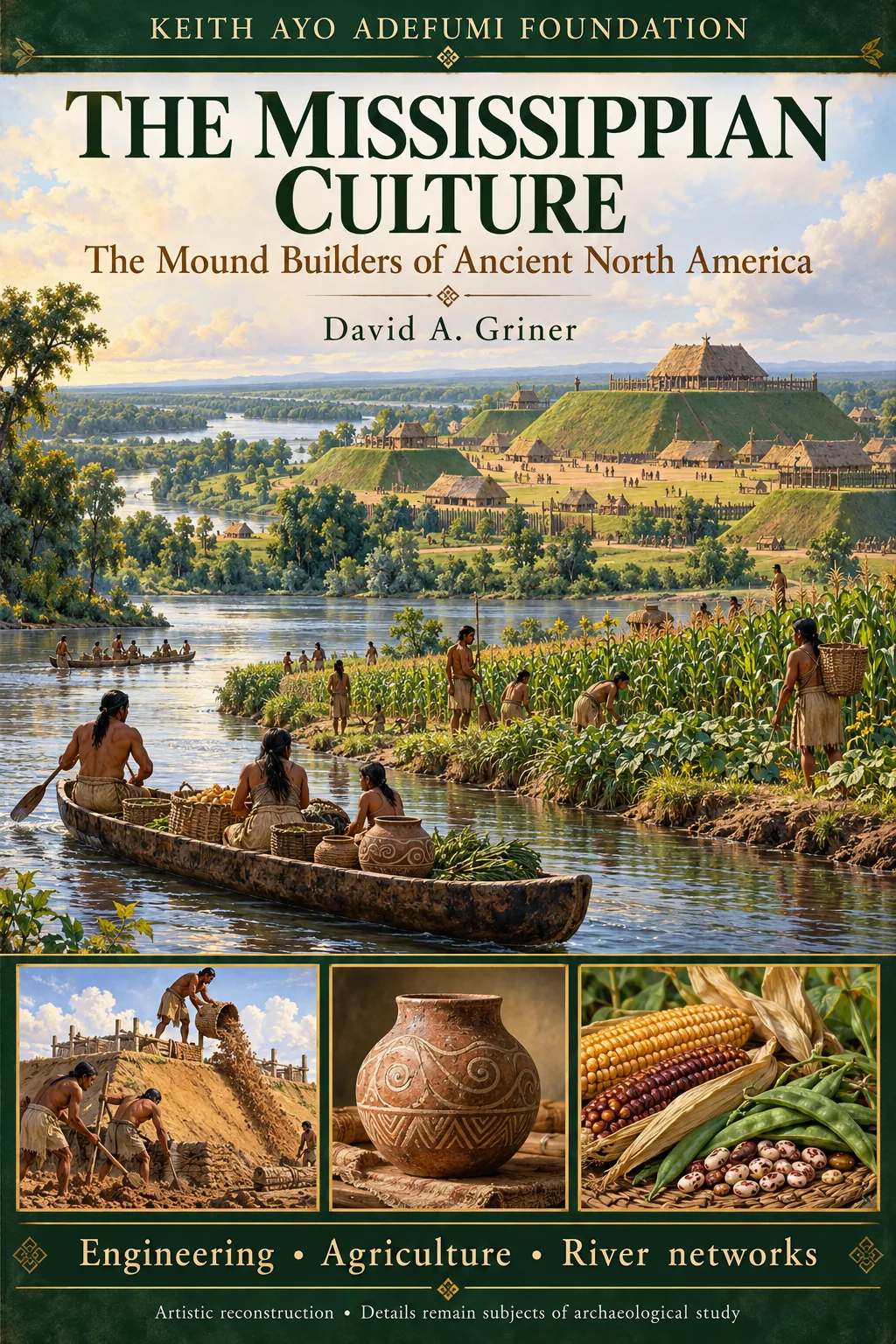
The Mississippian Culture: The Mound Builders of Ancient North America
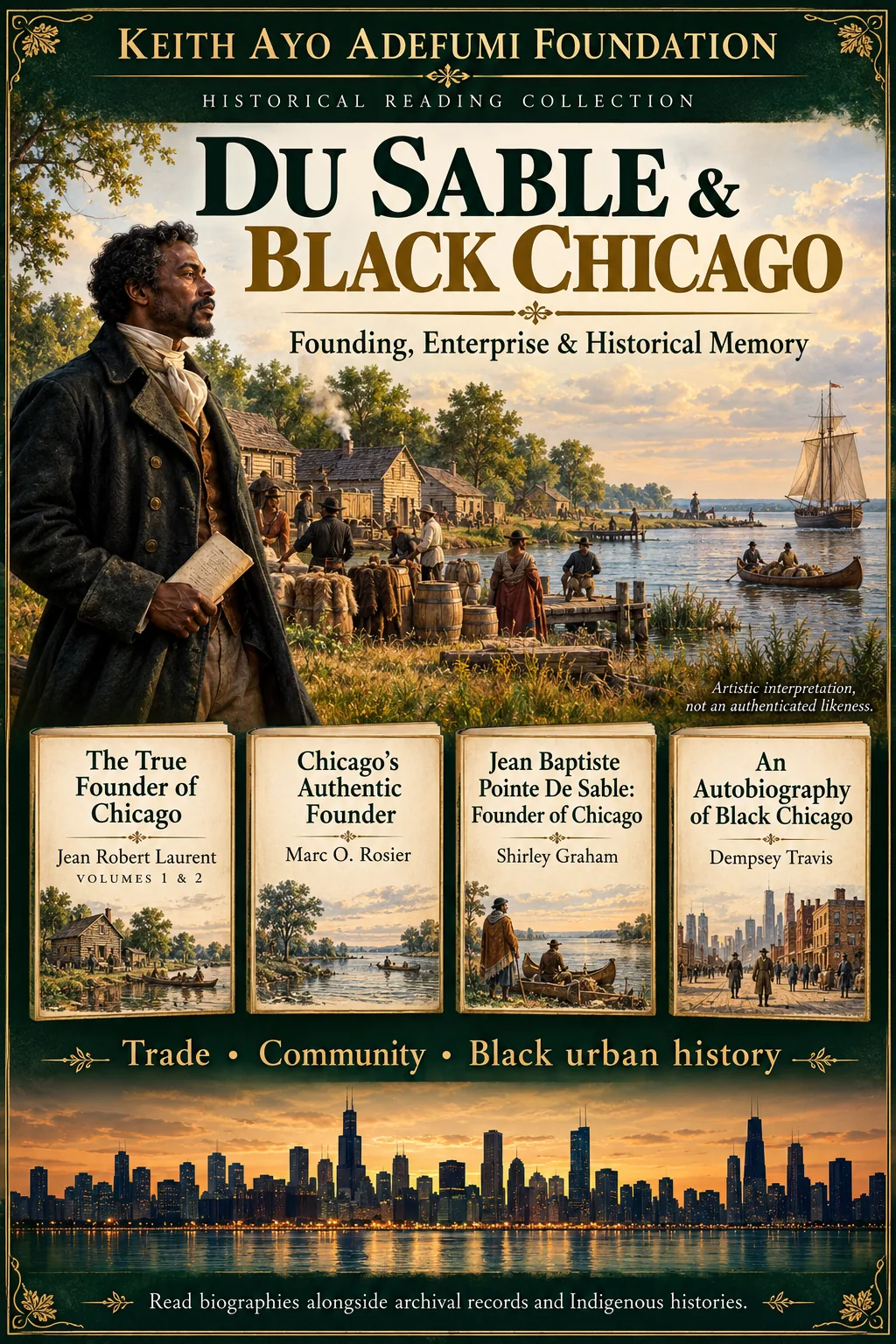
The True Founder of Chicago: Haitian Pioneer Jean Baptiste Pointe DuSable, Volumes 1 and 2
Chicago’s Authentic Founder
An Autobiography of Black Chicago
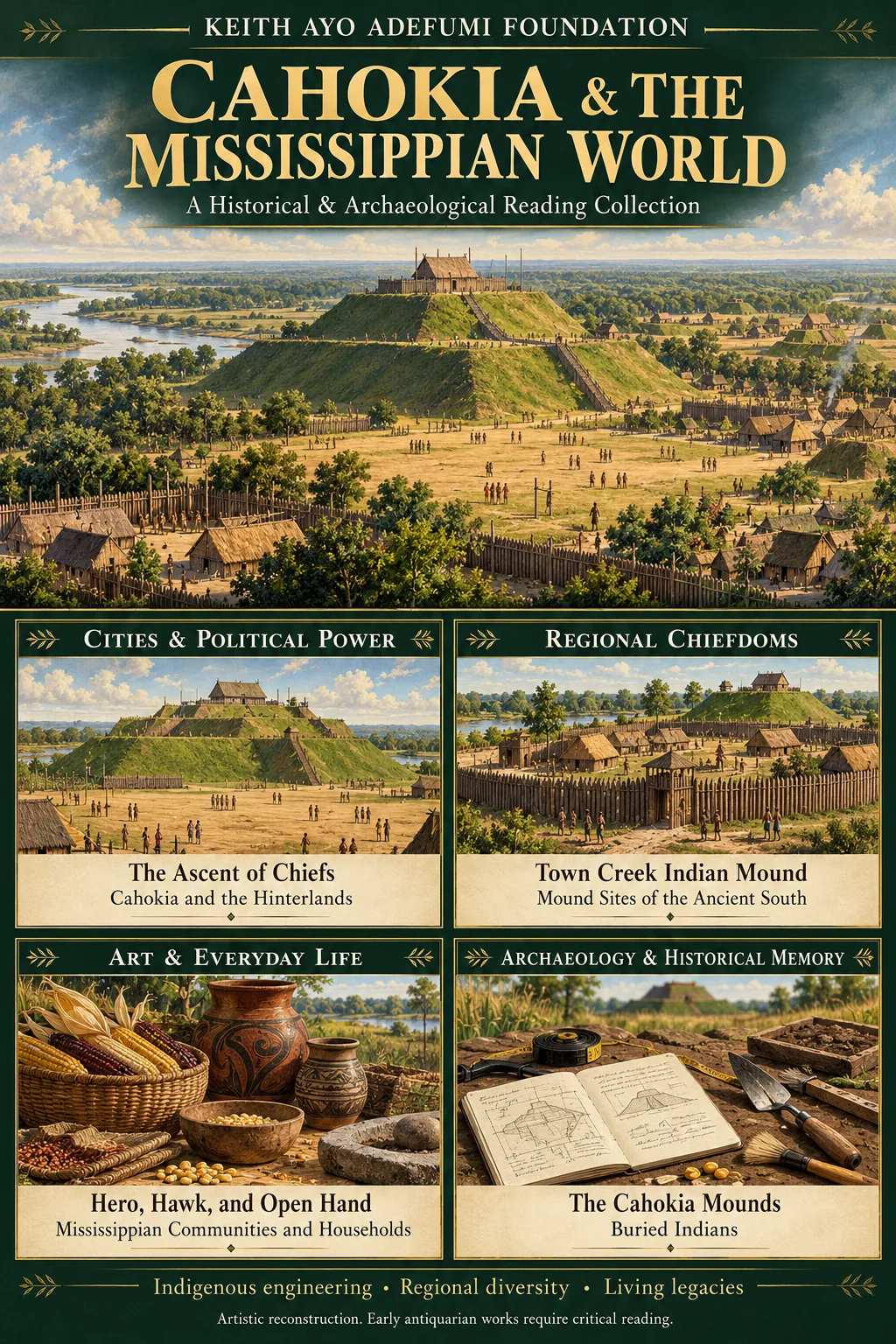
The Ascent of Chiefs
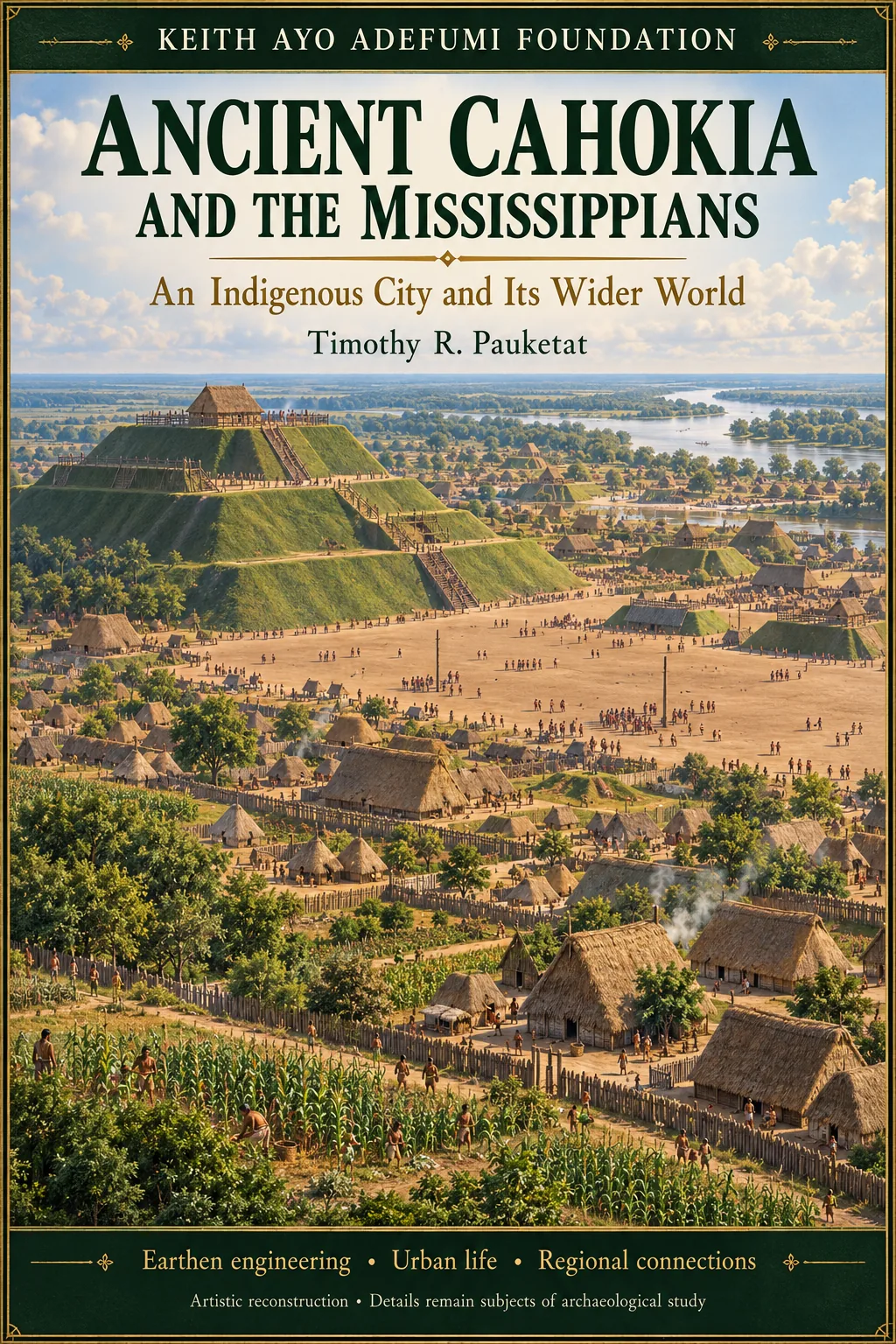
Explorations Into Cahokia Archaeology
Cahokia Archaeology as Viewed from the Mitchell Site
The Savannah River Chiefdoms
Ancient Chiefdoms of the Tombigbee
The Moundbuilders: Ancient Societies of Eastern North America
Archaeology at Shiloh Indian Mounds 1899–1999
Aztalan: Mysteries of an Ancient Indian Town
Ancient Objects and Sacred Realms
Mississippian Communities and Households
Visions, Regionalism, and the Art of the Mississippian World
Sunwatch: Fort Ancient Development in the Mississippian World
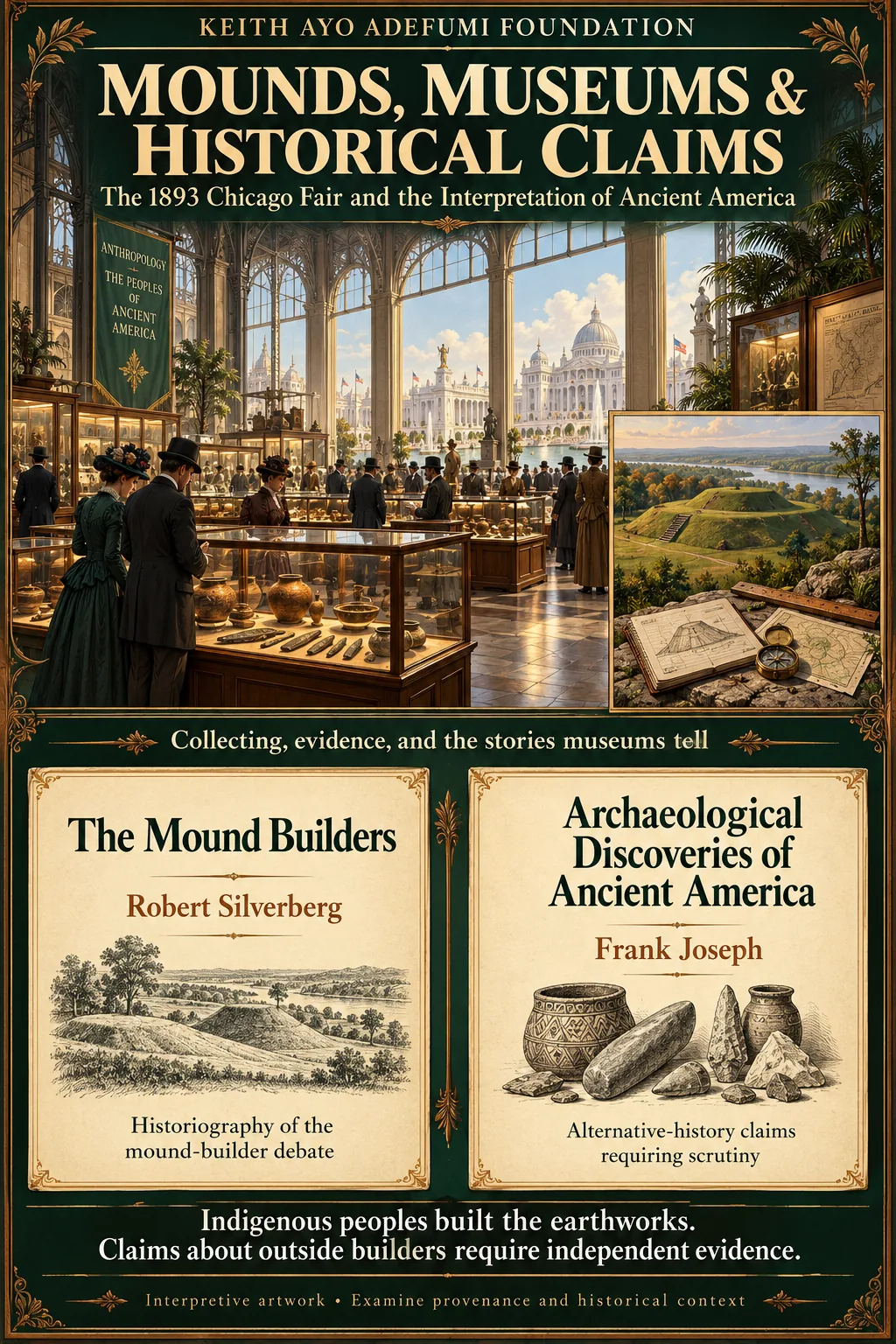
The Mound Builders (Robert Silverberg)
Archaeology of the Mississippian Culture: A Research Guide
Prehistoric Races of the United States
Woodland Mounds in West Virginia
The Great Book of Mississippi
Buried Indians
Black Chicago
The Warrior’s Belt
Black Life in West Central Illinois
Jean Baptiste Pointe du Sable: Father of Chicago
This Zine Is Asking You to Reframe How You Think About Jean-Baptiste Pointe Dusable
The Story of Jean Baptiste Du Sable
Sacajawea: A Guide and Interpreter of the Lewis and Clark Expedition
Pomp: The True Story of the Baby on the Lewis and Clark Expedition
The Conquest: The True Story of Lewis and Clark
Frontier Indiana
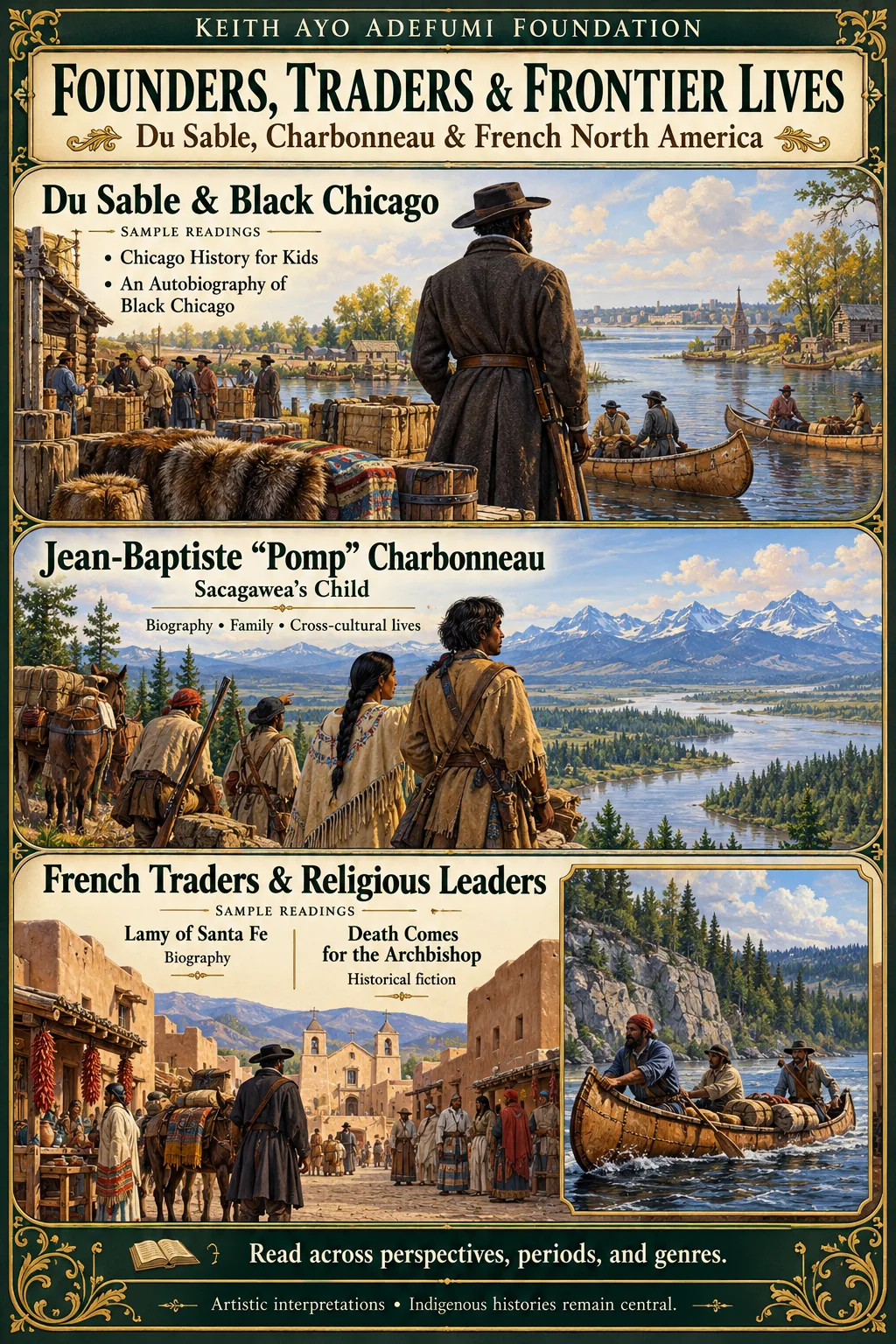
Lamy of Santa Fe
Death Comes for the Archbishop
Daring Pioneers Tame the Frontier
Jean-Baptiste Faribault: Pioneer Fur Trader of the Upper Mississippi
The French Heritage in the Mid-Mississippi Valley
Jean Baptiste Bienville: Founder of New Orleans
French Fur Traders and Voyageurs in the American West
The Voyageur
Ancient Egyptians and Chinese in America
Civilization and the Ancient Egyptians
Atlantis in America
Lost Cities of North & Central America
The Myths of the New World
Traveling Prehistoric Seas
The Return of the Serpents of Wisdom
Vedic Archeology and Dreadlocks
Hinduism in America: An Introduction
Homegrown Gurus
Gurus in America
Mantra: Hearing the Divine in India and America
Vedic Metaphysics
The Shiva Sutras
Shiva: The Wild God of Power and Ecstasy
The Play of Consciousness
The Great Book of Magic Art, Hindu Magic and East India Occultism
Anodea Judith’s Chakra Yoga
Destiny in the Palm of Your Hand
The Third High
Shiva: Stories and Teachings from the Shiva Mahapurana
The Hindus: An Alternative History
Awakening Shakti
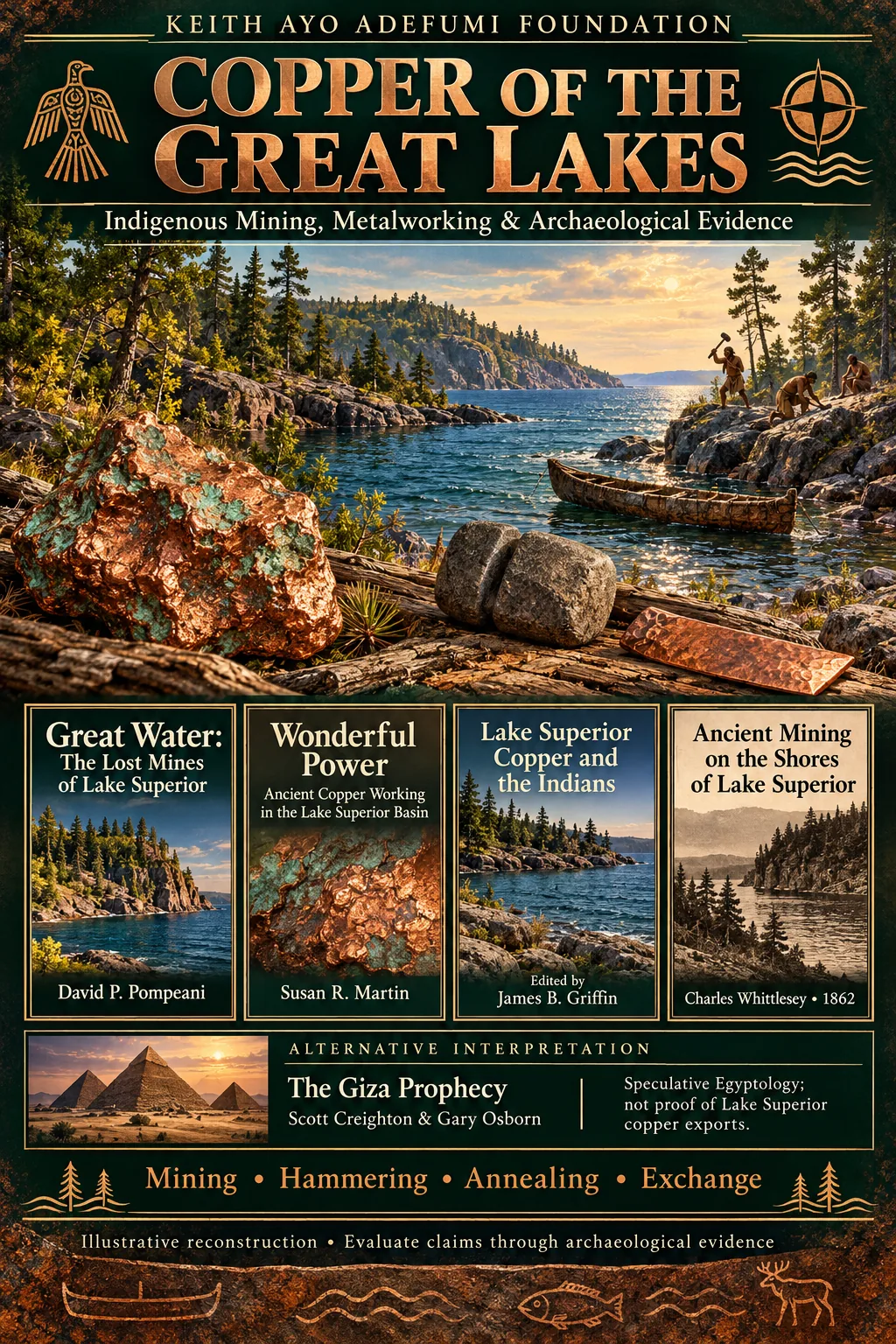
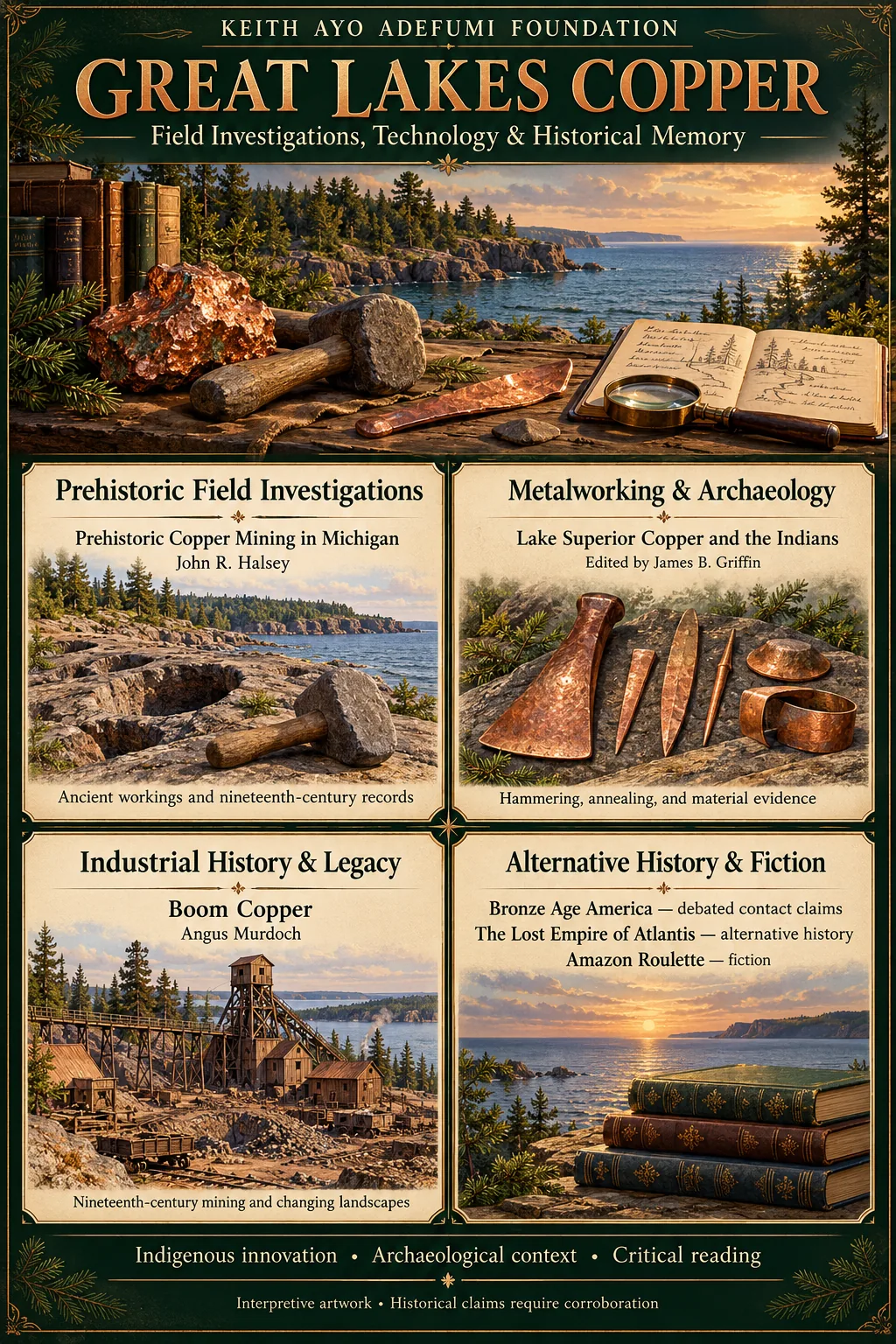
Great Water: The Lost Mines of Lake Superior
The Giza Prophecy
Ancient Mining on the Shores of Lake Superior
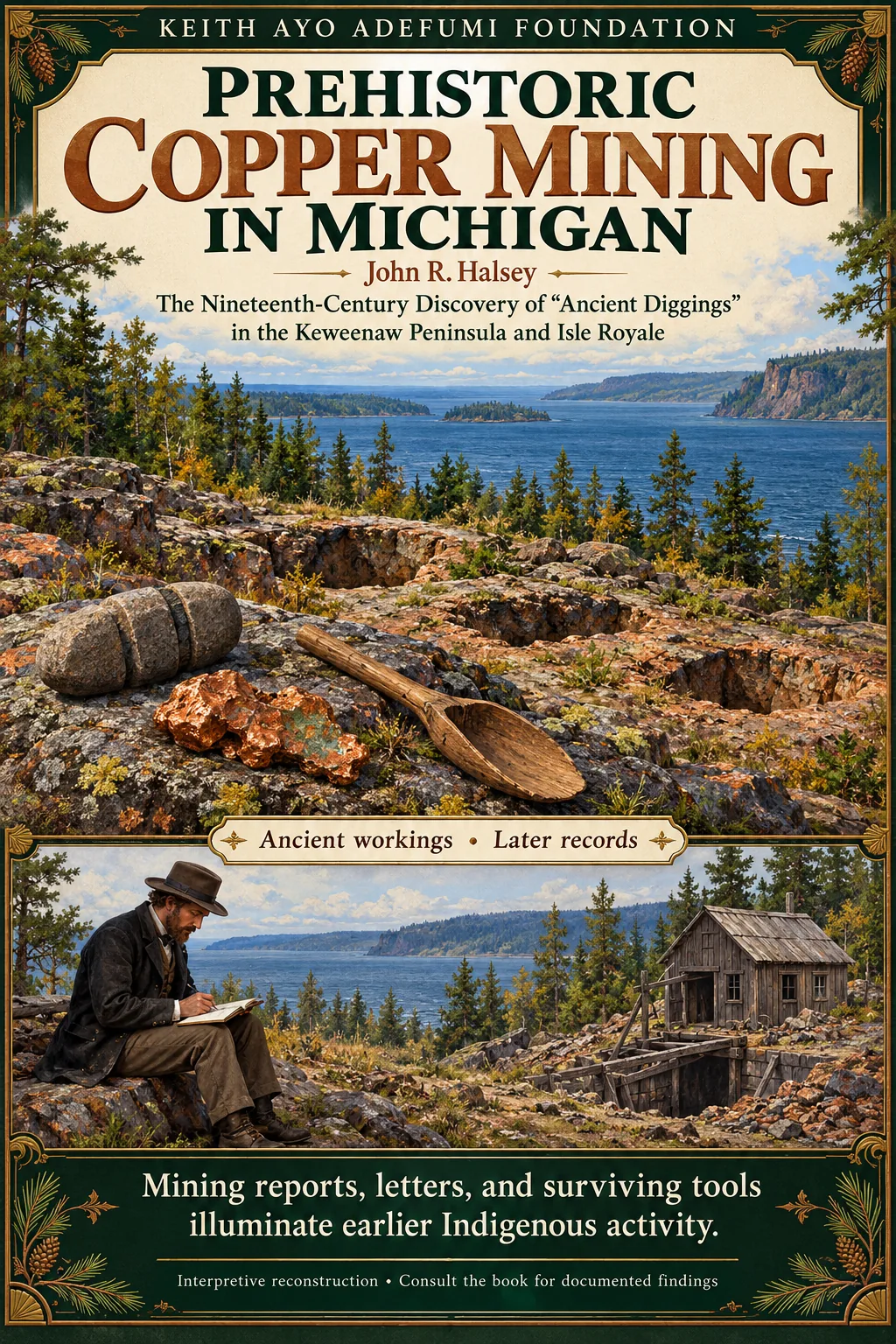
Prehistoric Copper Mining in the Lake Superior Region
Pre-historic and Modern Copper Mines of Lake Superior
The Ancient Copper Workings on Isle Royale
Isle Royale
Bronze Age America
Amazon Roulette
The Lost Empire of Atlantis
The Mound Builders: Their Works and Relics
The Legacy of American Copper Smelting
The Chemistry and Metallurgy of Copper
Boom Copper
The Old Copper Complex
Native American Metalworking in the Eastern Woodlands
Prehistoric Technology: A Metallographic Study of Copper Artifacts
The Ontonagon Boulder
The Magic of Copper
Archaeology of the Upper Peninsula
Prehistoric Indians of Wisconsin
Archaeological Discoveries of Ancient America
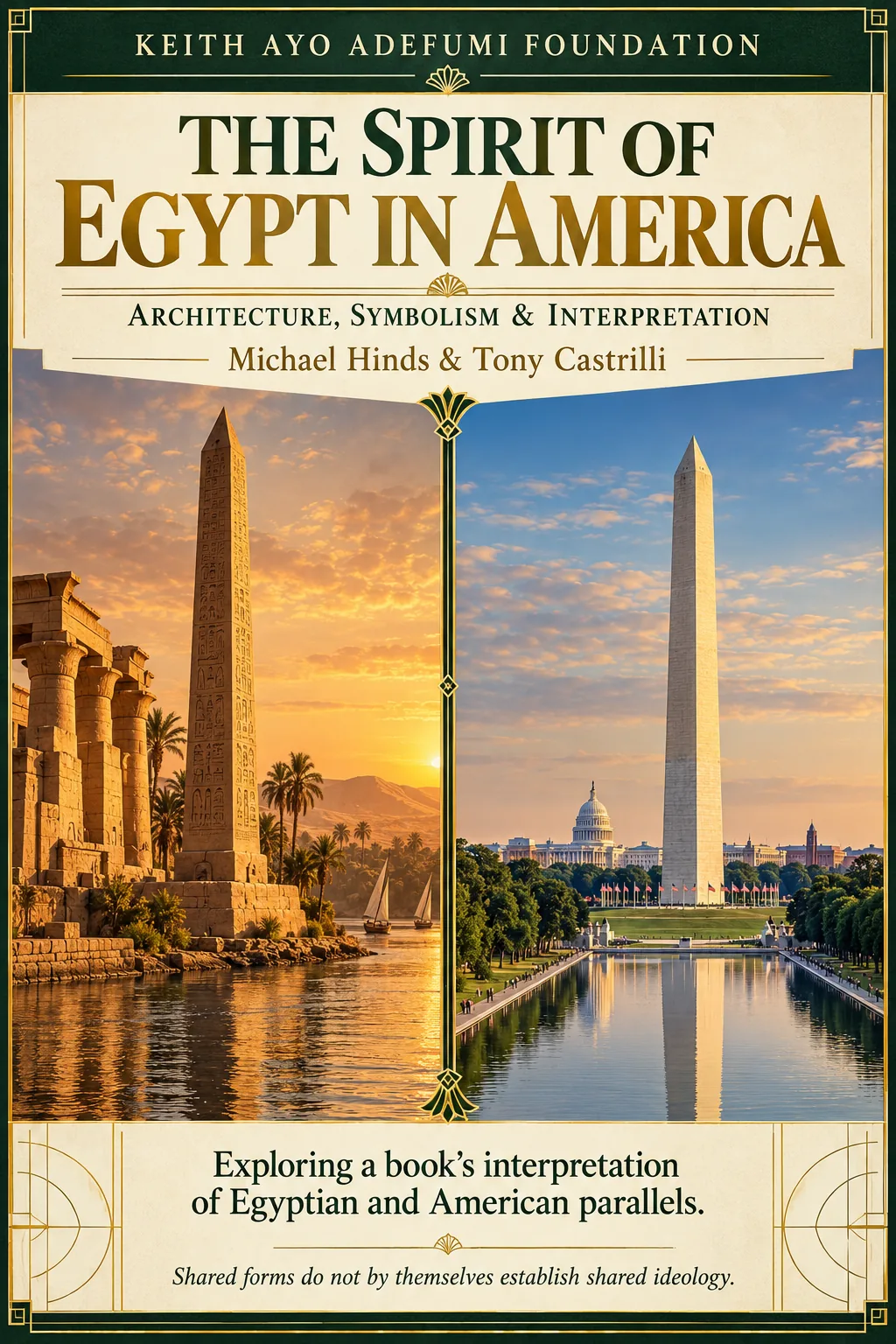
The Spirit of Egypt in America
Janet Jagan: My Mother’s Story — exact title, author, edition, and archival contents need verification
Amsterdam: The Financial Epicenter of 17th Century Europe — Raven Skye; retailer listing found, publisher, edition, and content review pending
Paddles Against the Champlain: Ancestral Rivers and the Erasure of Indigenous Space — attributed to Grinde; title, author, publisher, edition, and existence not verified
The Indian History of the New York Frontier — exact title, author, publisher, and edition not verified; do not substitute a similarly titled frontier history without confirmation
Each pathway contains three 60-minute sessions, a clear learning objective, a source-based activity, and a participant project. Investigate, create, then review. Use the evidence standards below throughout.
01Indigenous Engineering & Great Lakes ArchaeologyHow did Indigenous communities build cities, work copper, and sustain exchange?Three 60-minute sessions · Ages 14+ and adult learners · Expand learning plan
Learning objective
Explain one Indigenous engineering practice using two traceable sources while distinguishing archaeological observation from reconstruction.
Source-based activity
Compare a settlement or artifact record with a cited scholarly or community-authored account. Annotate materials, function, context, and the limits of interpretation.
What you will produce
Annotated engineering case study
One labeled drawing with observations separated from reconstruction
Materials, function, community and historical setting
Two citations with page or item identifiers
One unresolved question and the evidence needed to investigate it
Supporting learning outcomes
Explain Indigenous authorship of mound building and copper working using two sources.
Separate archaeological observations from interpretations.
Compare two regional communities without flattening their differences.
SESSION 1 · 60 MINUTES · INVESTIGATE
Cities and landscapes
Build a labeled settlement sketch; mark reconstruction separately from observation.
Examine linked sources and write three research questions.
02Black Chicago & Diasporic HistoriesHow do Black and Indigenous histories, Caribbean migration, and political journeys connect Chicago to wider worlds?Three 60-minute sessions · Ages 14+ and adult learners · Expand learning plan
Learning objective
Explain how a selected migration story and business history connect opportunity, barriers, and community life without generalizing an individual experience to a whole population.
Source-based activity
Compare a migration account with the existing George E. Johnson enterprise sources. Construct separate timelines for different people; corroborate business milestones and mark uncertain routes.
What you will produce
Migration map and small-business case study
Dated locations with solid lines for documented routes and dashed lines for proposed routes
Business milestones, opportunities and constraints
Two traceable sources and an explanation of their perspectives
One practical lesson for a present-day enterprise without asserting unverified kinship
Supporting learning outcomes
Distinguish Point du Sable from other figures named Jean-Baptiste.
Explain Kitihawa’s presence and Potawatomi context without treating Chicago as empty land.
Distinguish personal migration testimony, a selected biography, and evidence about a wider population.
SESSION 1 · 60 MINUTES · INVESTIGATE
Founding on inhabited land
Create a timeline with evidence citations and explicit gaps.
Examine linked sources and write three research questions.
03Living Traditions: Yoruba, Ifá & Indian SpiritualityHow do practitioners, scholars, and artists communicate living traditions?Three 60-minute sessions · Ages 14+ and adult learners · Expand learning plan
Learning objective
Describe a living tradition in its own terms and distinguish practitioner experience, academic interpretation, and unresolved historical claims.
Source-based activity
Compare a practitioner-authored source with a scholarly source. Optionally conduct a voluntary oral-history interview with explicit recording and sharing consent; a source-based profile is an equal alternative.
What you will produce
Oral-history or source-based tradition profile
Three attributed terms and their context
Interview excerpt with consent and firsthand/inherited distinction, or two-source profile
Comparison of perspectives without treating one speaker as representing every practitioner
One open question; participation does not require ritual practice
Supporting learning outcomes
Explain three terms using a named tradition and cited source.
Compare practitioner testimony with academic interpretation.
Distinguish documented modern transmission from speculative ancient contact.
SESSION 1 · 60 MINUTES · INVESTIGATE
Yoruba and Ifá voices
Create a glossary; do not equate odu categories with a fixed number of Orishas.
Examine linked sources and write three research questions.
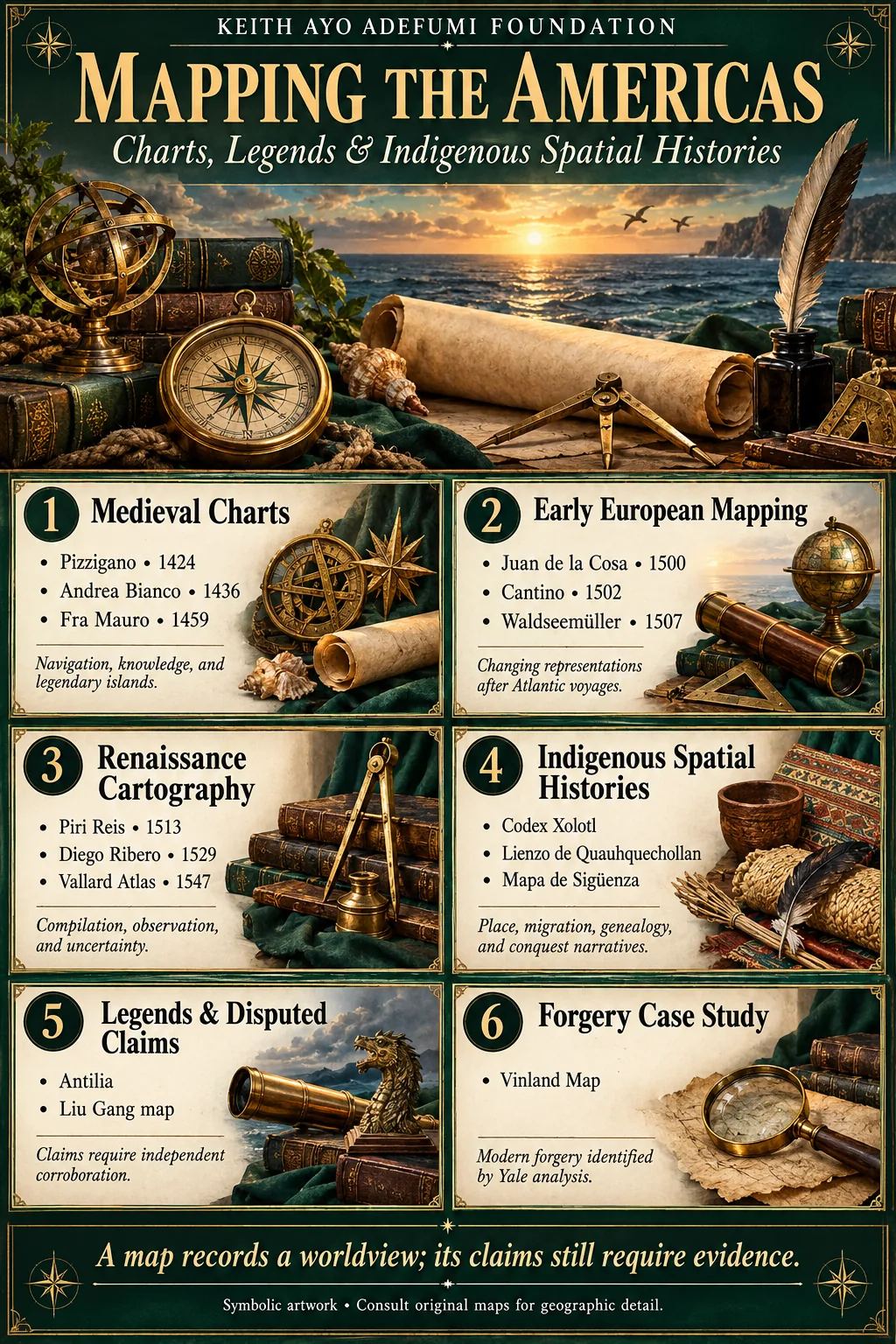
04Maps, Migration & Cultural ExchangeWhat can a map tell us—and what can it not prove?Three 60-minute sessions · Ages 14+ and adult learners · Expand learning plan
Learning objective
Interpret a map through its maker, date, audience, and provenance, explaining two limits on what it establishes.
Source-based activity
Compare two mapped representations of a region or exchange corridor. Identify changed labels, boundaries, omissions, and visual conventions; cite the record behind each observation.
What you will produce
Annotated map comparison
Maker, date, purpose or audience, and collection identifier for each map
Five labeled observations supported by source references
Two limits on interpretation
Separate proposed locations or causal links from documented map labels
Supporting learning outcomes
Identify maker, date, audience, and collection provenance.
Distinguish an authenticated object from a modern forgery.
Interpret Indigenous pictorial space alongside European cartography.
SESSION 1 · 60 MINUTES · INVESTIGATE
Maps as arguments
Mark known coasts, imagined lands, and the source of each identification.
Examine linked sources and write three research questions.
05Museums, Evidence & Contested Historical ClaimsHow do we investigate a compelling story responsibly?Three 60-minute sessions · Ages 14+ and adult learners · Expand learning plan
Learning objective
Evaluate a historical claim by tracing its earliest available evidence and comparing corroboration, contradictions, chronology, and alternative explanations.
Source-based activity
Choose one claim from the collection. Trace its source chain; distinguish repetition from independent corroboration; build an evidence-for/evidence-against table.
What you will produce
Claim-evidence brief
Exact claim and earliest available source
Evidence for, evidence against, and source dependencies
Qualified conclusion with reasons and confidence
Missing evidence and a practical next research step
Supporting learning outcomes
Separate publication verification from historical corroboration.
Identify what evidence could strengthen or weaken a claim.
Explain how collecting and exhibition histories affect interpretation.
SESSION 1 · 60 MINUTES · INVESTIGATE
Rumor and storytelling
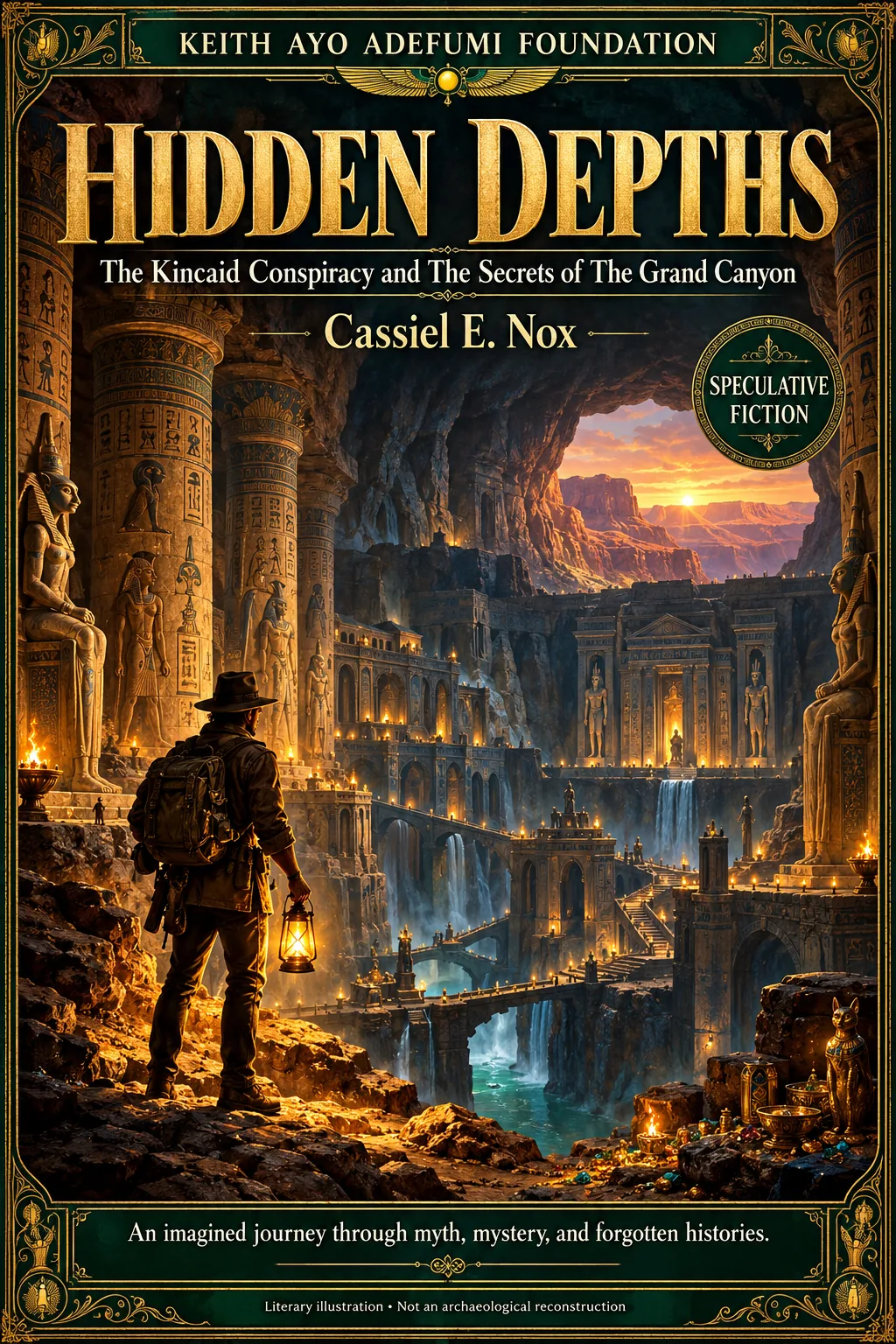
Trace the newspaper-to-fiction chain without treating repetition as independent confirmation.
Examine linked sources and write three research questions.
Apply these labels to individual statements, not entire books or people. Mixed evidence receives separate labels sentence by sentence.
Documented history
A specific statement supported by an identifiable source; sources may still contain bias or errors.
Record: Creator, title, date, page or item identifier, and the precise statement supported.
Family testimony
An attributed firsthand recollection or inherited family account. Testimony is valuable without being independent confirmation.
Record: Speaker, interview date, recording and sharing consent, and whether the account is firsthand or passed down.
Open research question
A connection or claim not resolved by the available evidence.
Record: Question, current evidence, missing evidence, and a practical next research step.
Family testimony remains valuable without being independent confirmation. Maps alone do not establish ancestry, ownership, or community membership. Generated posters are contemporary educational illustrations. Learners retain ownership of their work; public sharing is optional.
Pathway project assessment
At least 9/12; every statement labeled documented history has a traceable citation; consent is recorded for any shared interview material. This educational assessment is separate from the 90-minute pilot rubric.
Source traceability
0–3 points
Accurate evidence labeling
0–3 points
Reasoning
0–3 points
Clarity
0–3 points
0 — Missing
1 — Partial; substantial revision needed
2 — Adequate; minor revision needed
3 — Clear, specific and complete
Pathway 2 · Optional case study
Chicago–Guyana: Education, Migration & Political History
An optional extension within Pathway 2. Compare personal histories, institutional biographies, government chronology, and declassified documents.
Education and the Jagans
The Research Centre records Cheddi Jagan’s Northwestern dental studies in 1938–1942 and the Jagans’ 1943 marriage in Chicago. Janet Jagan later became Guyana’s first woman president in 1997. Study this individual connection without assuming a wider wartime recruitment pipeline.
Read the 1940 base correspondence alongside the official airport chronology: Atkinson Field in 1941, Timehri in 1969, and Cheddi Jagan International Airport in 1997. Investigate particular aircraft routes using flight and unit records.
Compare women’s migration narratives with archive-based political history. The University of Guyana opened in 1963. Chicago migration totals, neighborhood concentrations, and civic organizations need census, local archives, or oral-history evidence before they can be stated as established patterns.
Learning activity: Build a four-event timeline using two source types. Label a documented event, an interpretation, and an open research question.
Open research questions
The exact nursing program, meeting date, and train itinerary require supporting records.
A broad Northwestern–Cook County educational pipeline requires admissions, funding, or recruitment records.
Claims about specific Guyanese neighborhood clusters or Chicago migration surges require local demographic evidence.
The proposed memoir title and its alleged FBI records remain a research lead.
Pathway 4 · Optional trade-history extension
Chicago, Dutch Companies & Global Trade
An optional extension within Pathway 4, with source-evaluation connections to Pathway 5. Compare market institutions and colonial trade networks while distinguishing comparison from a documented chain of influence.
Amsterdam and Chicago’s markets
Petram studies the seventeenth-century Amsterdam market for VOC shares. The CBOT history and CME account address Chicago grain trading and later standardized futures. Compare instruments, contract terms, rules, and institutions; the checked records do not establish that Chicago adopted exact VOC practices directly.
Connect the portage’s Indigenous trade role with mapped community movements and a Citizen Potawatomi Nation account of the Beaver Wars. Examine commercial pressures alongside diplomacy, warfare, disease, and colonial expansion. Attribute each regional or chronological claim to its source.
Distinguish the VOC’s Asian operations from the WIC’s Atlantic enterprises. Investigate charters, diplomacy, coercion, religion, slavery, local merchants, and Indigenous responses. Compare accounts centered on company leaders with those that recover affected communities.
Chilaga: a label, a location, or a later interpretation?
McGill’s article identifies Chilaga on Wytfliet’s Nova Francia et Canada (1597) and describes it as a legendary place at the western frontier of Nova Francia. Treat three questions separately: what the map labels, where the label can reliably be located, and whether company records connect it to commercial decisions. Specific Chilaga passages attributed to Petram, Shorto, and Tanner have not been verified; their checked bibliographic records do not confirm those attributions.
Chief Johnson: kinship, interpretation & community authority
Use Hale’s biographical text to investigate Chief George H.M. Johnson’s work and compare its framing with community-authored governance accounts. McNab’s biography of George Martin reports Catherine Rollston’s adoption and qualifies her Dutch ancestry as alleged. Onondaga Nation describes Clan Mothers selecting and, when necessary, removing chiefs. Adoption, clan affiliation, and selection for office deserve separate attention; European ancestry alone does not explain Indigenous authority. The checked sources do not establish a WIC-sponsored family migration or Johnson’s involvement with Chilaga map labels.
Philology, river traditions & the people behind a text
Read Hale’s Chapter III acknowledgments to recover J. S. Johnson, George H.M. Johnson, and Isaac Bearfoot’s contributions. Compare the author’s Chapter I discussion of an Allegheny–Ohio–Mississippi river tradition with the evidence he cites. Distinguish what the historical author argued from what current research establishes. These passages do not document a WIC-based Johnson family route. The supplied Gutenberg ebook 245 is Mark Twain’s Life on the Mississippi, not a Johnson family history.
Learning activity: Make a two-column comparison of Amsterdam securities trading and Chicago commodity futures. Then map a fur-trade corridor, identifying the people and evidence behind each movement. Label a documented fact, a comparison, and an unconfirmed causal link. For Chilaga, make an evidence table with columns for a visible map label, an institutional interpretation, a proposed modern location, and a claimed commercial use. Cite a source for each supported statement and mark unresolved claims.
Claims requiring further evidence
Direct VOC-to-CBOT transmission needs contracts, citations, correspondence, or other evidence connecting the institutions.
Claims that the VOC alone created central banking or invented every derivative require separate institutional histories and earlier comparative evidence.
A specific WIC-to-Chicago migration chain needs dated, community-specific archival evidence; it cannot be assumed from Atlantic fur demand alone.
The 85% turnover figure needs a page citation, defined accounting category, and date range before it can be included as a verified statistic.
Specific Chilaga claims attributed to Petram, Shorto, and Tanner require edition and page references. A direct identification with Chicago or VOC/WIC investor intelligence needs independent cartographic and archival evidence.
Catherine Rollston/Rolleston’s alleged Dutch ancestry does not establish a WIC-sponsored settlement or passenger lineage. Verify identities, dates, places, and records for every genealogical link.
The proposed Chilaga derivations from Hochelaga or Shikaakwa and Johnson’s alleged correction of such map errors require linguistic and cartographic scholarship, plus specific archival or page citations. Johnson’s nineteenth-century work must be distinguished from sixteenth-century mapmaking.
Paddles Against the Champlain remains an unverified title; do not present it as an available published book.
Pathway 2 · Optional enterprise-history extension
Mississippi, Chicago & Black Enterprise
An optional extension within Pathway 2 comparing migration, enterprise, media, and the limits of freedom across different periods. Shared surnames are not evidence of kinship.
George E. Johnson: migration and cultural enterprise
The HistoryMakers profile reports a Mississippi birth in 1927 and relocation to Chicago with his mother in 1929. Johnson’s memoir and its publisher description connect Johnson Products with a major stock-exchange listing and Soul Train sponsorship. Investigate how products, employment, media, and philanthropy interacted; distinguish documented events from generalized explanations of why a family migrated. The Mississippi Blues Trail documents an Illinois Central corridor used by many migrants, but this contextual source does not confirm the Johnson family’s exact train route. Johnson Products’ 1954 founding is reported in The HistoryMakers profile.
William Johnson’s edited diary and National Park Service interpretation provide access to Natchez life between 1835 and 1851. He was born enslaved, gained freedom, built businesses, and later enslaved others. Compare his access to property and commerce with the racial restrictions and coercion affecting other people. Business success alone cannot explain the full social history.
Migration context and the structures of enterprise
Pair Wilkerson’s Great Migration history with Bailey’s edited enterprise collection and the Natchez diary. Compare different periods and kinds of evidence: interview-based historical synthesis, scholarly analysis, and an edited personal record. Wilkerson’s account includes both the search for opportunity and the difficulties migrants encountered in Northern cities. Bailey’s bibliographic record is checked; extensive Johnson Products coverage remains unconfirmed. The Natchez diary is already cataloged and is reused here.
Learning activity: Compare a diary excerpt with a memoir excerpt: identify author, date, audience, editorial mediation, opportunity, constraint, and a claim needing corroboration. Build separate timelines for William Johnson and George E. Johnson; compare themes without asserting family descent.
Claims requiring further evidence
No verified genealogical relationship has been established among William Johnson, George E. Johnson, and Chief George H.M. Johnson.
Chief Johnson’s proposed ancestral flight into the Upper Mississippi basin, WIC-derived family trade network, and direct Mississippi connection require dated archival evidence. His documented Grand River setting does not establish those claims.
Specific Johnson Products profiles in Bailey’s Black Business Enterprise need a chapter or page citation. The institutional bibliographic record alone does not establish that content.
George E. Johnson’s specific Illinois Central journey requires family testimony or another individual-level record. Regional rail history alone cannot verify a person’s itinerary.
Hale’s Chapter III credits the Johnson family and Isaac Bearfoot as linguistic collaborators; it does not by itself establish that Hale lived at Chiefswood or that Johnson’s family moved through the Mississippi basin. Broader claims about Siouan/Iroquoian migrations or empires require precise passages and modern comparative scholarship.
The existing poster gallery
Look closely. Ask better questions.
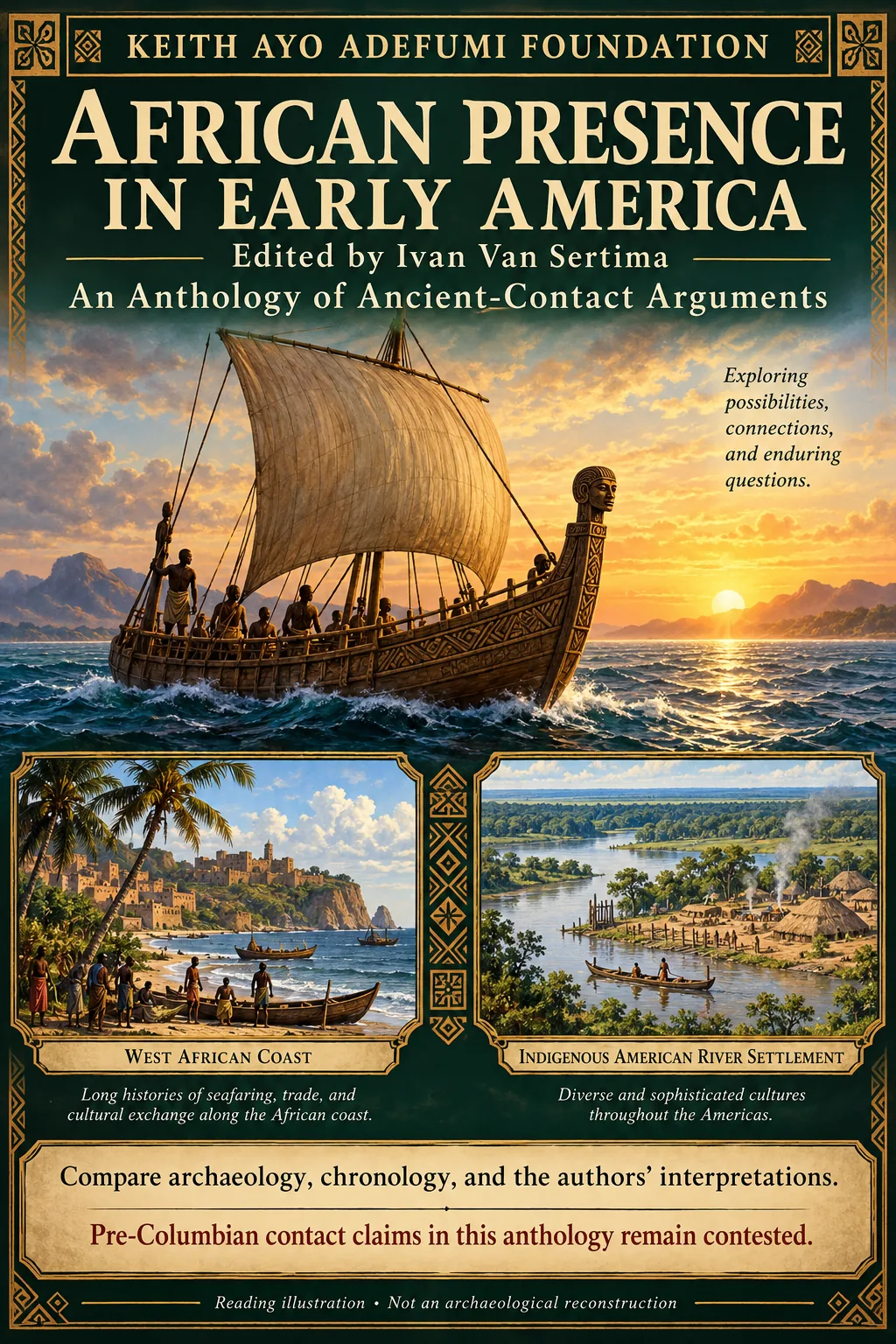
24 posters from the existing KAAF series, preserved as interpretive educational artwork. These AI-generated illustrations are not artifact photographs, documentary facsimiles, or verified historical likenesses. Read each contextual caption alongside the image.
24 posters
Historical voices
Tenskwatawa & Shawnee Traditions
Mediated transcripts and ethnographic records need source context.
Pilot proposal: delivery date, host, facilitator, accessibility arrangements, and budget remain to be agreed. No enrollment, delivery, partner endorsement, or measured outcomes are claimed.
The 90-minute learning sequence
0–10minutes
Welcome & baseline
Three short questions establish what learners understand about claims, images, and traceable sources.
10–25minutes
Copper & community
Locate Lake Superior and Cahokia; introduce Indigenous working, settlement, and exchange with institutional sources.
25–45minutes
Claim-card investigation
Groups distinguish a supported statement, an interpretation, and a claim unsupported by the source packet.
45–60minutes
Poster & provenance lab
Identify maker, date, genre, and perspective; compare an artistic reconstruction with a source record.
60–80minutes
Make an evidence brief
Use two traceable sources, revise a claim, and name evidence that could change the conclusion.
80–90minutes
Exit check & reflection
Repeat baseline questions, review the rubric, and record questions for the next session.
What learners produce
One evidence brief with a revised claim, two sources, a confidence statement, and missing evidence. The rubric scores source traceability, accuracy, observation versus interpretation, cultural attribution, and uncertainty, each from 0–2.
Proposed threshold: 7/10, with no zero for traceability or cultural attribution. This is a workshop assessment.
How the pilot will be evaluated
Proposed targets: 80% submit a brief; 70% meet the rubric threshold; 70% distinguish an illustration from historical evidence on the exit check. Report actual counts and denominators after delivery, including missing responses.
Partner-ready planning
Illustrative delivery budget: $400 for facilitation, printing, and access support, assuming an in-kind venue. This is a planning estimate. The downloadable kit includes the source packet, claim cards, learner worksheet, rubric, and budget assumptions.
Bring cultural learning to your community.
Schools, libraries, community partners, and funders can discuss hosting, source review, accessibility, or support for a first pilot.
Prepared from Keith Ayo Adefumi’s supplied collection with research and editorial assistance. Collection v1.6 · Reviewed 2026-10-08. The Foundation’s public-facing name is Imperium of Kush Americas. External texts retain their original rights; links and records are provided for learning.